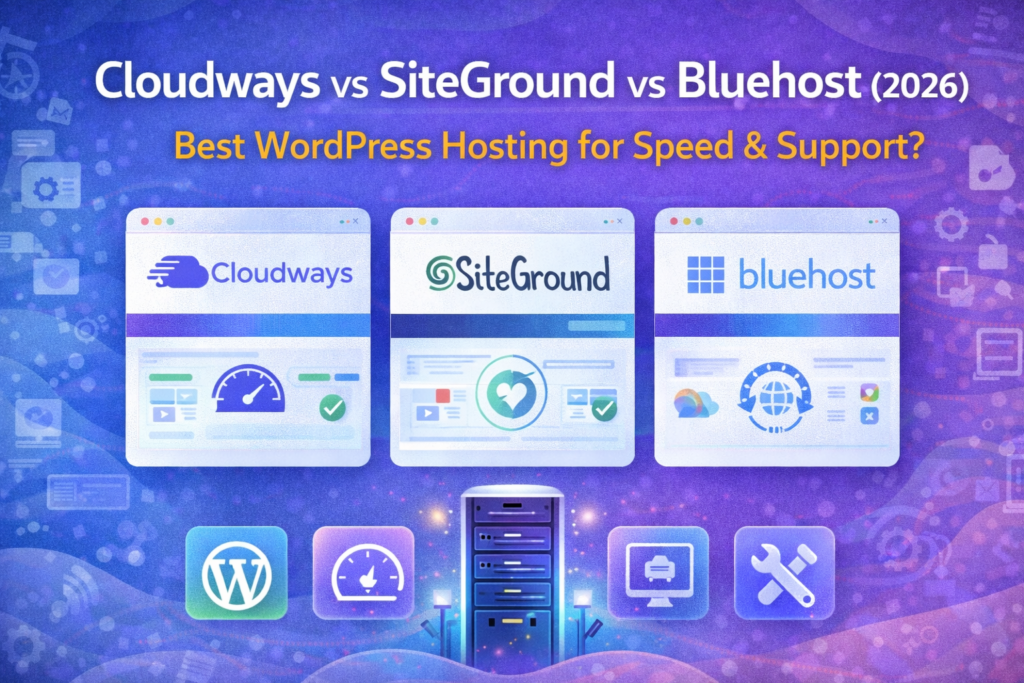
Cloudways vs SiteGround vs Bluehost (2026): Best WordPress Hosting for Speed & Support?
If you’re building a SaaS review site (or any content site) on WordPress, hosting speed isn’t just a technical detail—it directly impacts SEO, user experience, and conversion rate. Slow pages reduce engagement, and weak support can turn small issues into downtime.
In this comparison, we’ll break down Cloudways, SiteGround, and Bluehost—three popular hosting options with different strengths—so you can choose the best one for your goals in 2026.
“If you want a broader shortlist first, read our Best WordPress Hosting for Speed in 2026 (Tested Picks for Small Businesses) – PilotryLab guide.”
How to Choose WordPress Hosting (Speed-First Checklist)
1) Performance basics that matter for SEO
Look for:
- solid caching options
- fast server response times
- reliable uptime
- easy CDN integration (or built-in)
2) Support quality (it matters more than you think)
If you’re not technical, great support can save hours. If you are technical, you want support that doesn’t waste time.
3) Ease of management
Consider:
- staging environments
- backups
- one-click SSL
- plugin compatibility
- easy migration
4) Pricing that stays predictable
Some hosts look cheap upfront but increase at renewal, or require add-ons for basics.
Internal link (place inside this section):
“If you’re building your site pages too, see our Best Website Builders roundup for alternatives and faster launch options.”
Quick Comparison Table (2026)
| Host | Best for | Biggest strength | Main downside | Button CTA |
|---|---|---|---|---|
| Cloudways | Speed-focused sites & flexibility | Great performance control | Less beginner-friendly | Try Cloudways |
| SiteGround | Balanced speed + strong support | Easy WordPress experience | Price can rise on renewals | Get SiteGround |
| Bluehost | Beginners on a budget | Simple setup | Performance may vary by plan | Start with Bluehost |
1) Cloudways

Overview
Cloudways is often chosen by people who want more control over performance without managing everything from scratch. It’s a strong fit if speed is your top priority and you don’t mind a slightly more “technical” setup.
Key Features
- performance-focused hosting options
- backups and staging (plan/setup dependent)
- scaling resources as your traffic grows
- developer-friendly settings
Pros
- Great for performance and flexibility
- Scales well as your traffic increases
- Good option for speed-focused WordPress sites
Cons
- Not the simplest option for total beginners
- You may need to learn a bit about caching and setup
Pricing (high-level)
Pricing typically depends on server resources and configuration.
Best for
Content sites that care about speed and scalability.
“If you’re driving signups from content, pairing fast hosting with high-converting pages helps—see our Best Landing Page Builders for Small Businesses (2025) guide.”
2) SiteGround

Overview
SiteGround is popular for its balance: good performance, helpful support, and a WordPress-friendly experience. It’s a great choice when you want fewer headaches and a smoother day-to-day workflow.
Key Features
- WordPress-friendly management tools
- strong support experience
- backups, SSL, and basic performance features
- easy migration options (depending on plan)
Pros
- Great support (especially for non-technical site owners)
- Very WordPress-friendly setup
- Reliable for long-term site management
Cons
- Renewal pricing can be higher than introductory deals
- Advanced performance tuning may require extra configuration
Pricing (high-level)
Plans vary by features and renewal pricing—check the renewal cost before committing.
Best for
Teams that want a stable WordPress host with strong support.
3) Bluehost
Overview
Bluehost is a common beginner choice because it’s easy to start and often priced competitively for new sites. It can be a fit if you want a simple launch and don’t need advanced performance tuning on day one.
Key Features
- beginner-friendly onboarding
- basic WordPress setup flow
- hosting plans for different stages
- standard management features
Pros
- Easy start for beginners
- Widely used and straightforward
- Often affordable entry pricing
Cons
- Performance and support experience can vary by plan
- You may outgrow it if you scale traffic and need more speed control
Pricing (high-level)
Pricing varies by plan; the key is understanding renewal costs and what’s included.
Best for
Brand-new WordPress sites that want a simple, budget-friendly start.
Best Pick (Quick Verdict)
- Best for speed + scalability: ✅ Cloudways
- Best for support + WordPress experience: ✅ SiteGround
- Best for beginners on a budget: ✅ Bluehost
3 Real Use Cases (For SaaS content sites)
Use case 1: New site launching fast
If you want the simplest path to publishing content quickly, start with a beginner-friendly host and upgrade when traffic grows.
Use case 2: Content site scaling SEO traffic
Prioritize speed, caching, and stability. Hosting choices matter more as pages and plugins grow.
Use case 3: Teams who want “less maintenance”
Choose the host that reduces friction: easy backups, helpful support, and smooth management.
FAQ ?
Which hosting is best for WordPress speed in 2026?
Cloudways is often chosen for speed and scalability, while SiteGround offers a balanced experience with strong support. The best choice depends on how hands-on you want to be.
Is SiteGround worth it if renewal prices are higher?
It can be worth it if you value support and a stable WordPress experience. Always compare renewal pricing against the time you’ll save.
When should I upgrade from Bluehost?
If your site grows (more traffic, more plugins, heavier pages) and you need more performance consistency, it may be time to upgrade.
Does hosting affect SEO directly?
Hosting affects page speed and uptime, which impact user experience and can influence SEO performance—especially on content-heavy sites.
What should I read next on PilotryLab?
Start with our Best WordPress Hosting guide, then improve conversions with Best Landing Page Builders, and build your system with the Lead Generation Stack.
Best CRM Software
“Once leads start coming in, you’ll want a pipeline to manage them—start with our Best CRM Software for Small Businesses (2026) — Top Picks Compared roundup.”
Best Email Marketing Software
“After someone signs up, email onboarding is where revenue happens—see our Best Email Marketing Platforms for Small Businesses in 2026 (Free + Paid Picks) guide.”