Best Landing Page Builders for Small Businesses in 2025

Best Landing Page Builders
Landing pages are where marketing turns into money. A strong landing page can collect leads, book calls, sell a product, or move a visitor into your email list—without needing a full website rebuild.
But small businesses have a unique problem: you need something fast, easy, and conversion-focused—not a complicated platform that requires a designer every time you want to change a headline.
This guide compares the best landing page builders for small businesses in 2025, with a practical focus on what actually matters: templates, speed, integrations, A/B testing, pricing value, and how quickly you can launch.
Quick Summary Comparison Table
| Tool | Best for | Starting price | Key strength |
|---|---|---|---|
| Leadpages | Beginners + simple lead gen | From “entry-level” plans | Easy, quick publishing |
| Unbounce | Conversion-focused campaigns | Mid-tier pricing | Strong optimization tools |
| Instapage | Teams + paid ads at scale | Higher-tier pricing | Advanced personalization |
| Carrd | Ultra-simple one-page landers | Very low cost | Fast, lightweight pages |
| Elementor (WordPress) | Full control on WP sites | Low–mid (plugin + hosting) | Design freedom + ownership |
1) Leadpages
Overview
Leadpages is one of the most popular landing page platforms for small businesses because it’s built to get you online quickly. You pick a template, customize it with a drag-and-drop editor, connect your email marketing tool, and publish.
It’s ideal if you want a reliable platform that doesn’t require lots of technical decisions—especially for lead magnets, webinar registrations, and simple service funnels.
Key Features
- Drag-and-drop landing page builder
- Large template library (lead gen focused)
- Pop-ups and alert bars (often included depending on plan)
- Basic integrations with email tools + CRM
- Simple publishing workflow
Pros
- Very beginner-friendly
- Templates designed for lead generation
- Fast to launch and update
- Good for service businesses and solo founders
Cons
- Design flexibility is good, but not “limitless”
- Advanced experimentation features may be limited compared to enterprise tools
- Some features can depend on the plan level
Pricing (summary)
Typically positioned as mid-range for SMBs, with plans that scale by features and usage.
Best for
Small businesses that want to launch landing pages fast with minimal tech headaches.
Verdict
A strong “default choice” if you want a dedicated landing page tool that’s simple, proven, and easy to maintain.
2) Unbounce
Overview
Unbounce is designed around conversion. It’s a landing page platform that emphasizes testing, iteration, and performance—especially for paid traffic.
If your business runs campaigns and you care about improving conversion rate over time (not just building pages), Unbounce is built for that mindset.
Key Features
- Drag-and-drop builder with flexible layouts
- A/B testing (commonly offered in conversion-focused plans)
- Dynamic text replacement (useful for ad-message matching)
- Integrations for CRM/email marketing
- Conversion insights and optimization tools
Pros
- Excellent for paid traffic and CRO
- Strong testing/optimization culture
- Flexible design control
- Good for agencies and marketers
Cons
- Can feel “more advanced” than basic builders
- Higher cost compared to entry-level tools
- Some features require learning and process
Pricing (summary)
Usually mid-to-higher pricing for small businesses, justified if you test and optimize regularly.
Best for
Businesses running Google Ads / Meta Ads or agencies managing multiple landing pages.
Verdict
If you’re serious about conversion rate optimization, Unbounce is one of the best platforms to grow performance over time.
3) Instapage

Overview
Instapage is often chosen by teams spending significant money on ads and needing advanced control: collaboration, personalization, and enterprise-style workflows.
For many small businesses, Instapage is “premium”—but it can be worth it if landing pages are a major revenue engine and you need deep control across campaigns.
Key Features
- High-quality page builder + premium templates
- Collaboration tools (comments/approval workflow)
- Personalization features (ad-to-page alignment)
- Advanced publishing and page management
- Integrations for analytics and marketing stacks
Pros
- Very polished experience
- Great for teams collaborating on campaigns
- Strong for scaling paid campaigns
- Often includes advanced page management
Cons
- Usually expensive for early-stage small businesses
- Overkill if you just need a few lead pages
- Best value appears at scale
Pricing (summary)
Commonly considered higher-tier. Ideal when performance gains justify cost.
Best for
Small businesses with serious paid ad budgets or teams needing workflow + personalization.
Verdict
Premium tool for premium needs—excellent for scaling campaigns, not the best first choice for budget startups.
4) Carrd
Overview
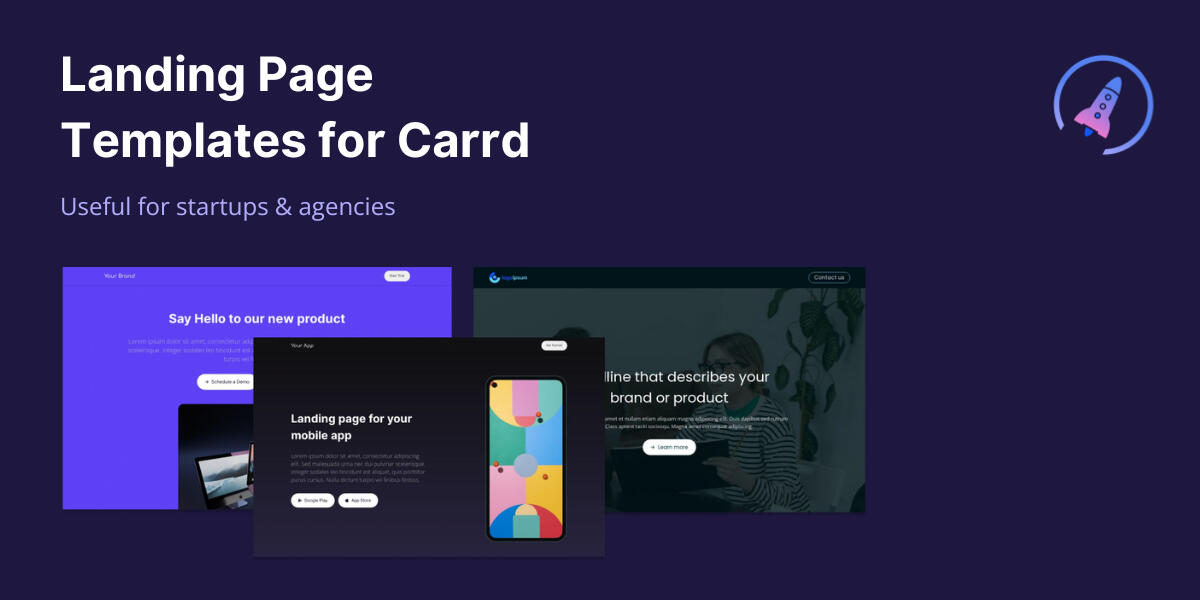
Carrd is the simplest way to launch beautiful one-page websites and landing pages. It’s lightweight, fast, and extremely affordable.
It won’t replace a full funnel platform for complex testing and enterprise features, but for a small business that just needs a clean landing page (with a form, buttons, and sections), Carrd is unbelievably effective.
Key Features
- One-page site builder (fast + clean)
- Responsive templates
- Form integrations (often via third-party tools)
- Custom domains (usually via paid plan)
- Simple embedding (videos, widgets, forms)
Pros
- Extremely low cost
- Fast pages (great for mobile experience)
- Very easy to use
- Great for MVPs, waitlists, and lead magnets
Cons
- Not built for deep A/B testing
- Limited “funnel” features compared to dedicated landing platforms
- Integrations may require extra tools
Pricing (summary)
Typically very low cost, making it one of the best values for small businesses.
Best for
Waitlists, simple lead pages, creators, and startups validating an offer.
Verdict
For quick, clean landing pages on a budget, Carrd is a top pick—especially when you want speed and simplicity.
5) Elementor (WordPress)
Overview
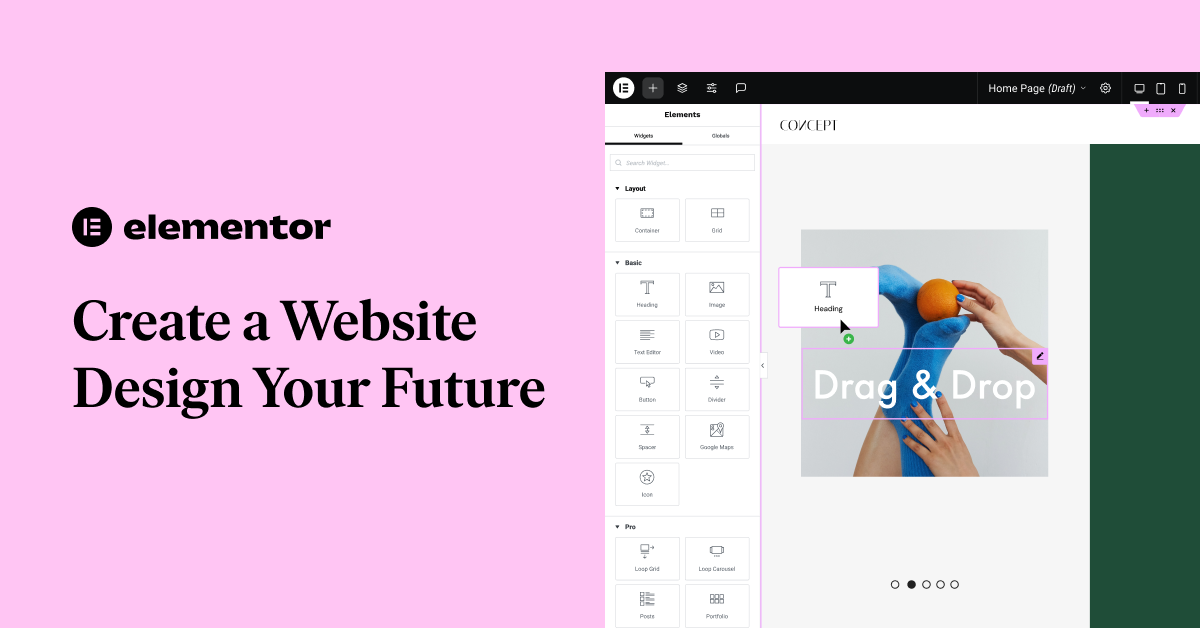
Elementor is a WordPress page builder, not a standalone landing page SaaS. But for small businesses that already use WordPress (or want ownership + flexibility), Elementor can be a powerful option.
With Elementor, your landing pages live on your own site. That means you control performance, SEO, and the entire funnel experience. It also pairs well with WordPress plugins for forms, caching, and analytics.
Key Features
- Drag-and-drop page building on WordPress
- Landing page templates and full theme building (depending on version)
- Integrations via WordPress ecosystem
- Full control over SEO + site structure
- Works with caching/performance plugins
Pros
- You own everything (no vendor lock-in)
- Highly flexible design
- Great if you’re building a content site + landing pages
- Infinite extension options via WordPress plugins
Cons
- You’re responsible for speed/hosting quality
- Can get heavy if you overload plugins
- Setup is more “techy” than pure SaaS builders
Pricing (summary)
Generally low-to-mid, but remember you’ll also pay for hosting and possibly additional plugins.
Best for
Small businesses building long-term on WordPress, especially content + affiliate + lead funnels.
Verdict
Best choice if you want maximum control and already operate in the WordPress ecosystem—great long-term value.
How to Choose the Right Landing Page Builder
1) If you want the easiest launch
Pick a tool like Leadpages. You’ll ship pages quickly without worrying about hosting or complex settings.
2) If you run ads and want higher conversion rates
Choose Unbounce (or Instapage if you’re scaling and need premium workflows). A/B testing and message match matter when paid traffic is involved.
3) If you’re on a tight budget
Use Carrd. It’s clean, fast, and cheap—and good enough for most early funnels.
4) If you want full ownership and SEO control
Go with Elementor on WordPress. Great if your business also needs content marketing and wants everything under one domain.
5) If you need integrations
Check compatibility with your stack:
- Email marketing (ConvertKit, Mailchimp, Brevo, ActiveCampaign)
- CRM (HubSpot, Zoho, Pipedrive)
- Automation (Zapier, Make)
- Analytics (GA4, Pixel)
Final Recommendations
Best for most small businesses
✅ Leadpages — easiest path to professional landing pages fast.
Best for performance and optimization
✅ Unbounce — ideal for paid traffic and CRO.
Best premium option for scaling campaigns
✅ Instapage — for teams and higher ad budgets.
Best budget choice
✅ Carrd — minimal cost, fast, clean.
Best for WordPress owners and long-term growth
✅ Elementor — ownership + flexibility + strong ecosystem.
Internal Linking :
Landing pages perform even better when connected to reliable email marketing platforms.
FAQ :
1) What is the best landing page builder for small businesses?
For most small businesses, Leadpages is a great balance of ease of use, templates, and quick publishing. If you run ads and optimize, Unbounce is often better.
2) Do I need A/B testing on landing pages?
If you run paid ads or rely heavily on conversions, A/B testing can significantly improve results. If you’re just starting, focus on one strong page first, then test once you have traffic.
3) Are WordPress landing pages better than SaaS builders?
WordPress builders like Elementor give you ownership and SEO control, but you must manage hosting and performance. SaaS builders are simpler and faster to deploy.
4) What makes a landing page convert well?
A high-converting landing page usually has one clear offer, a strong headline, social proof (testimonials/logos), a single CTA, minimal distractions, and fast loading speed.
5) Should I put landing pages on a subdomain?
It depends. Many businesses use the main domain (better brand consistency), while some use subdomains for campaign tracking. Either can work if analytics and SEO are handled properly.
6) Which landing page builder is best for paid ads?
Unbounce and Instapage are commonly preferred for ad campaigns because they focus on conversion optimization, message match, and campaign workflows.