GoDaddy vs Hostinger (2026): Which Hosting Provider Should You Choose?
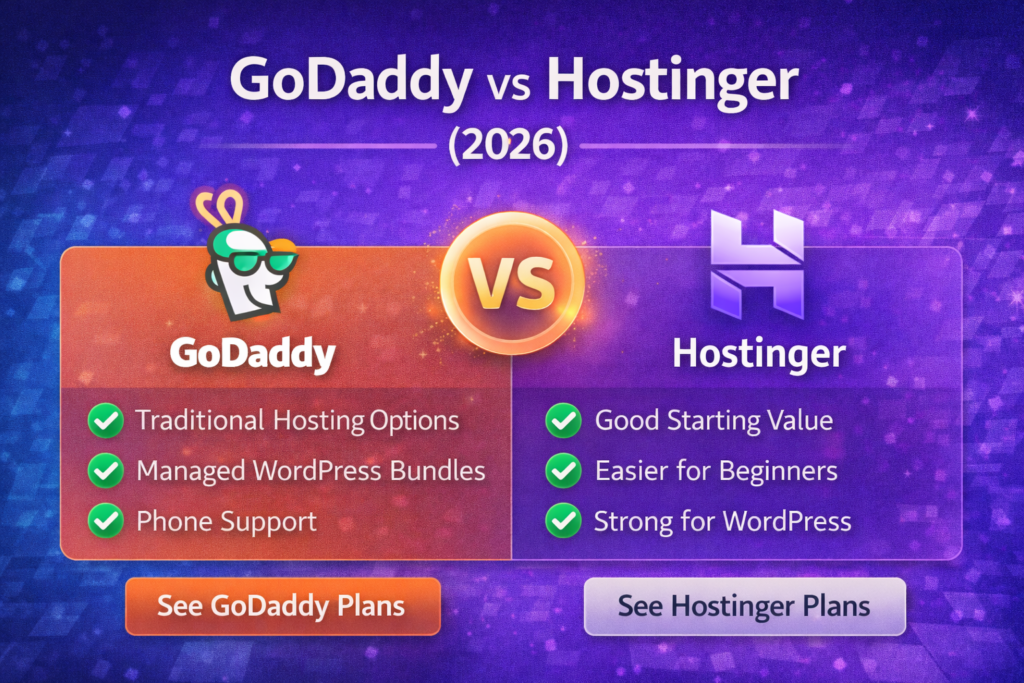
GoDaddy and Hostinger both offer beginner-friendly hosting, WordPress plans, and a path to scale—but they feel very different in day-to-day use.
- Hostinger usually wins on value-for-money and beginner-friendly setup (with a modern dashboard and aggressive intro pricing on many plans).
- GoDaddy often appeals to users who want an “all-in-one” brand, plus traditional hosting options and managed WordPress hosting bundles.
This guide compares GoDaddy vs Hostinger in 2026 across pricing, performance, WordPress, support, and best use cases—so you can pick the right host without wasting weeks migrating later.
“If you want a broader shortlist (not just these two), add a link here to your Best WordPress Hosting for Speed in 2026 (Tested Picks for Small Businesses) – PilotryLab guide.”
Quick Verdict (Fast Picks)
- Choose Hostinger if you want the best starting value, a simple user experience, and strong features-per-dollar for WordPress or content sites.
- Choose GoDaddy if you prefer a long-established provider, want a more traditional hosting experience (including cPanel on some plans), and like GoDaddy’s managed WordPress bundles and onboarding.
GoDaddy vs Hostinger Comparison Table (2026)
| Feature | Hostinger | GoDaddy |
|---|---|---|
| Best for | Value + fast setup | All-in-one brand + traditional hosting |
| Dashboard | Modern custom panel (Hostinger UX) | Traditional hosting options; cPanel on some plans |
| WordPress hosting | Managed WP options + performance tooling | Managed WP plans with included features |
| Performance approach | LiteSpeed-related performance guidance in docs/tutorials | Emphasizes performance + CDN claims in WP hosting marketing |
| Entry pricing style | Often very low intro pricing shown on pricing pages | Entry pricing varies; web hosting and WP hosting pages list plan pricing |
| Support | 24/7 support mentioned by many comparisons | Known for 24/7 support and phone options in reviews |
Note: Hosting prices change frequently (promos vs renewals). Always double-check the current price on the official pricing pages before buying.
Pricing: Which Is Cheaper in 2026?
Hostinger pricing (what to expect)
Hostinger’s pricing pages often show very low introductory pricing (for example “from $1.99/mo” on some plans), usually tied to longer billing periods.
What this means: Hostinger is frequently the better deal upfront, but renewal pricing and plan choice still matter.
GoDaddy pricing (what to expect)
GoDaddy shows multiple hosting categories—web hosting and managed WordPress hosting—each with its own pricing tiers.
What this means: GoDaddy can be competitive on promos, but you’ll want to compare (1) shared hosting vs (2) managed WordPress hosting depending on your needs.
“If you’re comparing hosts specifically for WordPress performance, link to your Best WordPress Hosting for Speed in 2026 (Tested Picks for Small Businesses) – PilotryLab article and position this post as the ‘vs deep dive.’”
Ease of Use: Control Panel & Setup
Hostinger
Hostinger is known for a more modern, guided setup experience, and its site emphasizes beginner-friendly onboarding and quick starts.
If you’re launching a content site or affiliate blog and want less friction, Hostinger usually feels smoother.
GoDaddy
GoDaddy offers traditional hosting flows, and its web hosting plans mention cPanel in plan details (which some users prefer because it’s familiar).
If you’ve used cPanel before and want a “classic hosting” workflow, GoDaddy may feel more comfortable.
Performance: Speed & Reliability (Practical View)
Performance is not only the host—your theme, caching, images, and plugins matter a lot. But host tooling can help.
Hostinger performance notes
Hostinger provides documentation around LiteSpeed-related performance optimization for WordPress (including guidance that WordPress hosting clients can use LiteSpeed optimization profiles with the LiteSpeed Cache plugin).
Why this matters: It suggests Hostinger is actively supporting performance best practices, especially for WordPress.
GoDaddy performance notes
GoDaddy’s managed WordPress hosting pages emphasize speed features (including CDN-related claims and managed optimization messaging).
Why this matters: GoDaddy positions its managed WordPress offering as a “hands-off” performance + maintenance solution.
WordPress Hosting: Which Is Better for Content Sites?
Hostinger for WordPress
Hostinger markets managed WordPress hosting and leans into performance/security tooling and support.
Best if: you want solid value, and you’re willing to follow recommended performance steps (caching, optimization profiles, etc.).
GoDaddy for WordPress
GoDaddy offers managed WordPress hosting with multiple tiers and bundled features on its managed WP page.
Best if: you want a more managed experience (less DIY), and you’re okay paying for convenience.
Internal link (place here):
“If you’re building a full content engine, link here to Best Website Builders for Small Businesses in 2026 (Tested Picks)(for users not committed to WordPress) and keep readers inside your site.”
Customer Support: Who’s Better?
Support experience can vary by region and plan, but general trends show:
- Comparisons often describe 24/7 support on both providers.
- Reviews commonly highlight GoDaddy’s phone support availability as a notable advantage for some users.
Rule of thumb:
- If you value phone support, GoDaddy may be attractive.
- If you’re okay with chat/tickets and you want value, Hostinger is typically compelling.
Security & Backups: What to Check Before Buying
No matter which host you choose, confirm these items in your plan:
- SSL included (and whether it renews free)
- Backup frequency (daily/weekly) and restore process
- Malware scanning or security hardening options
- Staging environment for WordPress (nice-to-have)
Both providers’ official pages and plan matrices are the best place to verify what’s included at the moment you buy.
Best Use Cases (Choose Based on Your Site)
Choose Hostinger if you’re doing…
1) Affiliate/content site (like PilotryLab-style publishing)
Hostinger’s low entry pricing and beginner-friendly positioning make it a common pick for new sites.
2) WordPress site focused on speed optimization
Their LiteSpeed-related optimization guidance is a plus for WordPress performance workflows.
Choose GoDaddy if you’re doing…
1) You want a more traditional hosting workflow (cPanel comfort)
GoDaddy’s web hosting plan details mention cPanel, which some users prefer for familiar server management.
2) You want managed WordPress bundles from a long-established brand
GoDaddy clearly positions its managed WordPress plans with tiered pricing and managed features.
FAQ ?
Q1: Is Hostinger better than GoDaddy in 2026?
Hostinger is often the better value and easier for beginners, while GoDaddy can be a better fit if you want traditional hosting workflows and phone support options.
Q2: Which is cheaper long-term?
Intro pricing can be very different from renewals. Hostinger frequently advertises very low starting prices on long plans, and GoDaddy also runs promos—so you should compare renewal terms before committing.
Q3: Which host is better for WordPress?
Hostinger is strong for value and optimization workflows, while GoDaddy’s managed WordPress plans target users who want more “hands-off” maintenance.
Q4: Do I need managed WordPress hosting?
Not always. If you can handle updates, caching, and backups, shared hosting can work. Managed WP is best when you want convenience and support for WordPress-specific tasks.
Q5: What’s the biggest mistake when choosing hosting?
Buying only based on the cheapest promo price. Always check: renewal price, backup policy, and performance tooling.
Pingback: Amp Reviews (2026): Features, Pricing, Pros & Cons (Ampcode by Sourcegraph)